
Walkways, Steps & Driveways
The routes people actually use — front walk, entry steps, driveway — built level, drained and safe to walk on in winter.
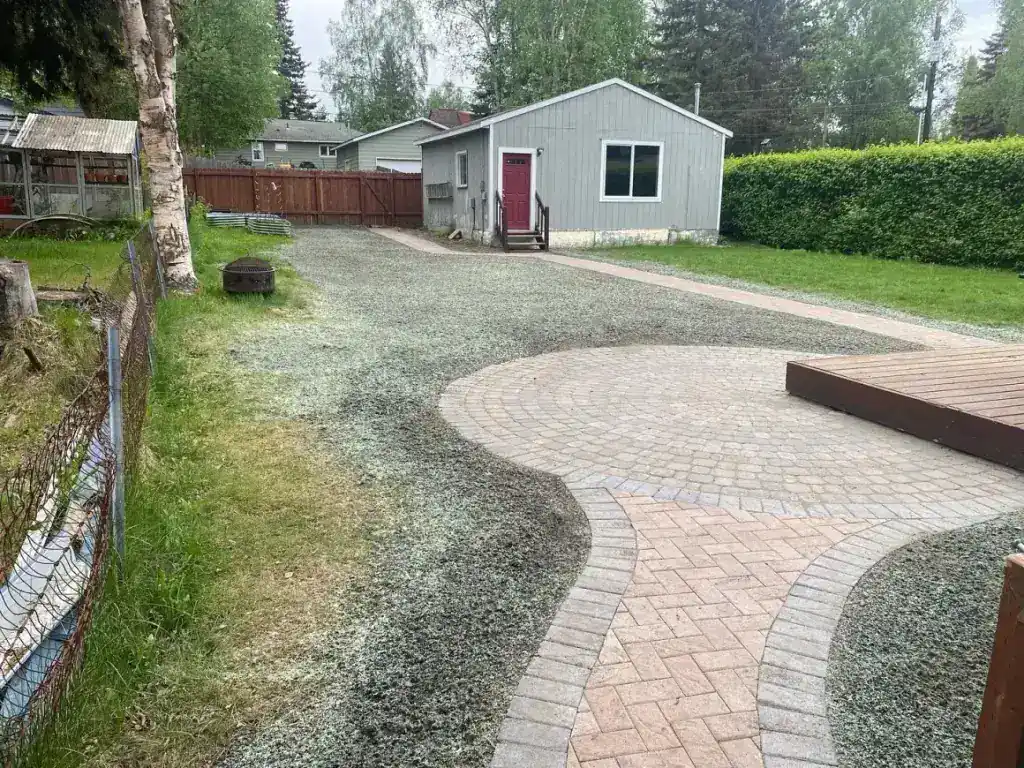
A walkway is the part of a landscape people touch every day, and the part where settling shows first. It is also, in this climate, a safety question: a step that has heaved out of line is a trip hazard for half the year and invisible under snow.
Steps that stay level
Risers should be the same height the whole way up — people climb stairs by feel, not by looking. Keeping them that way after a few winters means the same base work a wall needs: proper depth, compaction in lifts, and drainage underneath.
Where the water goes
A path that collects water is a sheet of ice in October. Getting the fall right — across the route, away from the house — is most of what makes one usable in winter.
What this includes
- Paver walkways
- Natural stone paths and stepping-stone paths
- Landscape stairs with consistent riser heights
- Permeable driveways
- Decorative gravel surfaces
- Grading so water leaves the route rather than sitting on it
How a project runs
- 01 Consultation We come out, walk the property and listen to what you want the space to do.
- 02 Plan and quote A plan and a price you can look at and change before anything is dug.
- 03 Build Drainage and grading first, then hardscape, then soil and planting — in that order.
- 04 Walkthrough We hand it over in person and explain what it needs to stay the way it looks.
Frequently asked questions
Can you fix a walkway that has settled?
Usually. Pavers can be lifted, the base corrected and the same pavers relaid, which is why they are worth using on ground that moves.
What about heated driveways or walkways?
Snow-melt systems are installed at the base stage, so it is a decision to make before construction rather than after. Tell us early if it is something you are considering.
Do you do driveway aprons and parking areas?
Yes, in both pavers and concrete, including the grading and drainage that keeps meltwater off them.