
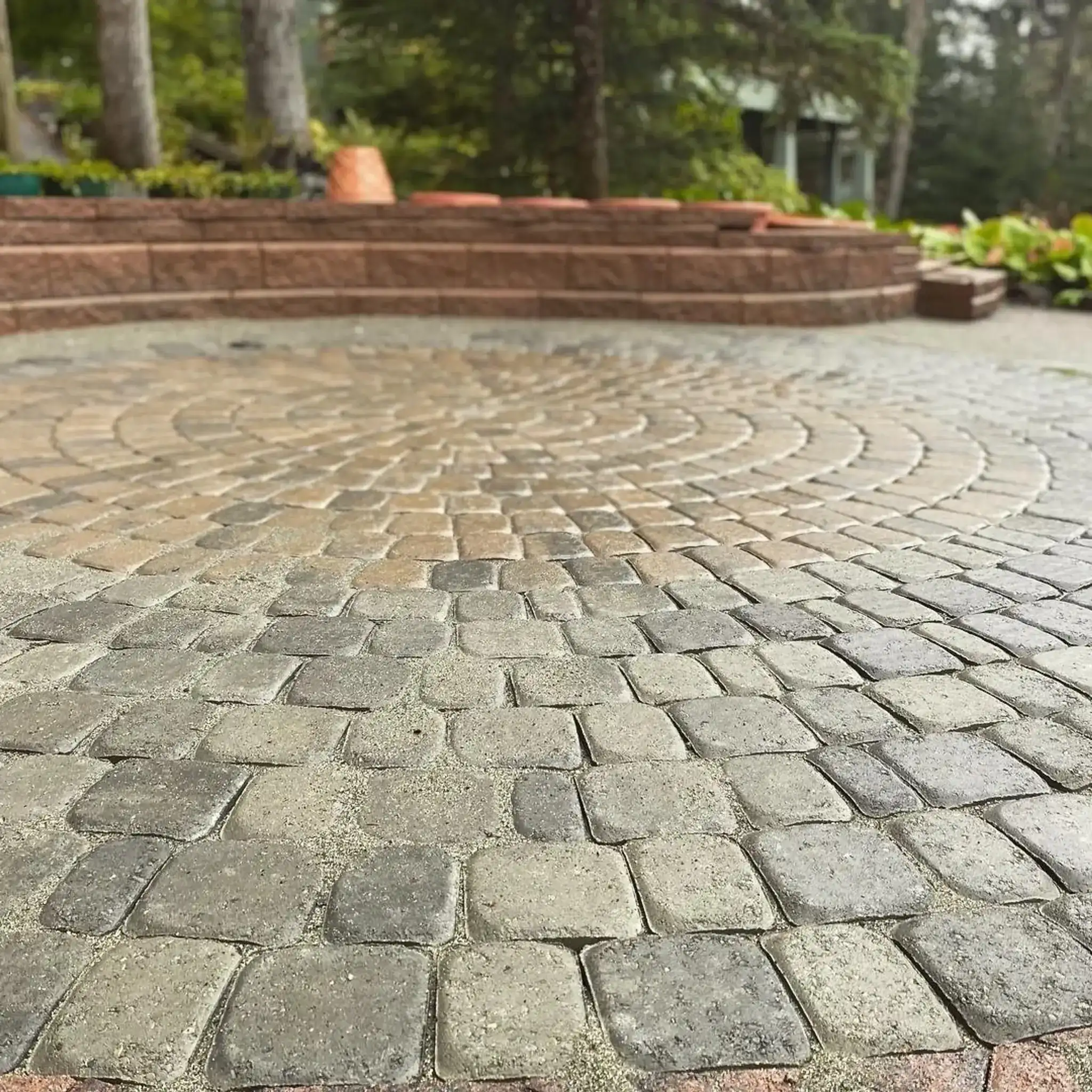
A paver patio is one of the few things you can add to a property that is genuinely used every day it is warm enough to sit outside. It is also one of the easiest to get wrong, because everything that matters is buried before the first paver is laid.
The base is the patio
Pavers are just the surface. What keeps them flat is the depth of the excavation, the quality of the aggregate, and how thoroughly it was compacted in layers rather than all at once. Skimp on any of the three and the patio will tell on you the following spring.
What goes wrong, and why
- Dips and low spots — usually a base compacted in one thick lift instead of several thin ones
- Heaving — water held in the base with nowhere to drain, then frozen
- Edges creeping outward — no edge restraint, or one that was never properly pinned
- Weeds and ants in the joints — the wrong jointing sand, or none swept in at all
Details worth insisting on
Fall away from the house
A patio should shed water away from the foundation, not toward it. It is a slight fall — enough to move water, not enough to feel underfoot or tip a table.
Edge restraint all the way round
Without it the outer course has nothing holding it in, and a patio slowly widens and opens at the joints over a few seasons.
Pavers rated for freeze-thaw
Not every product sold as a paver is made for a climate that freezes and thaws repeatedly. It is worth asking the question before anything is ordered.
Planning around a short season
Between break-up and first frost there is not a great deal of building weather. Work that is designed and scheduled over the winter tends to go in calmly; work that starts with a phone call in July tends not to. We take consultations year round for that reason — see how we work.
Have a spot in mind? Send us a few details and we will come and look at it.